
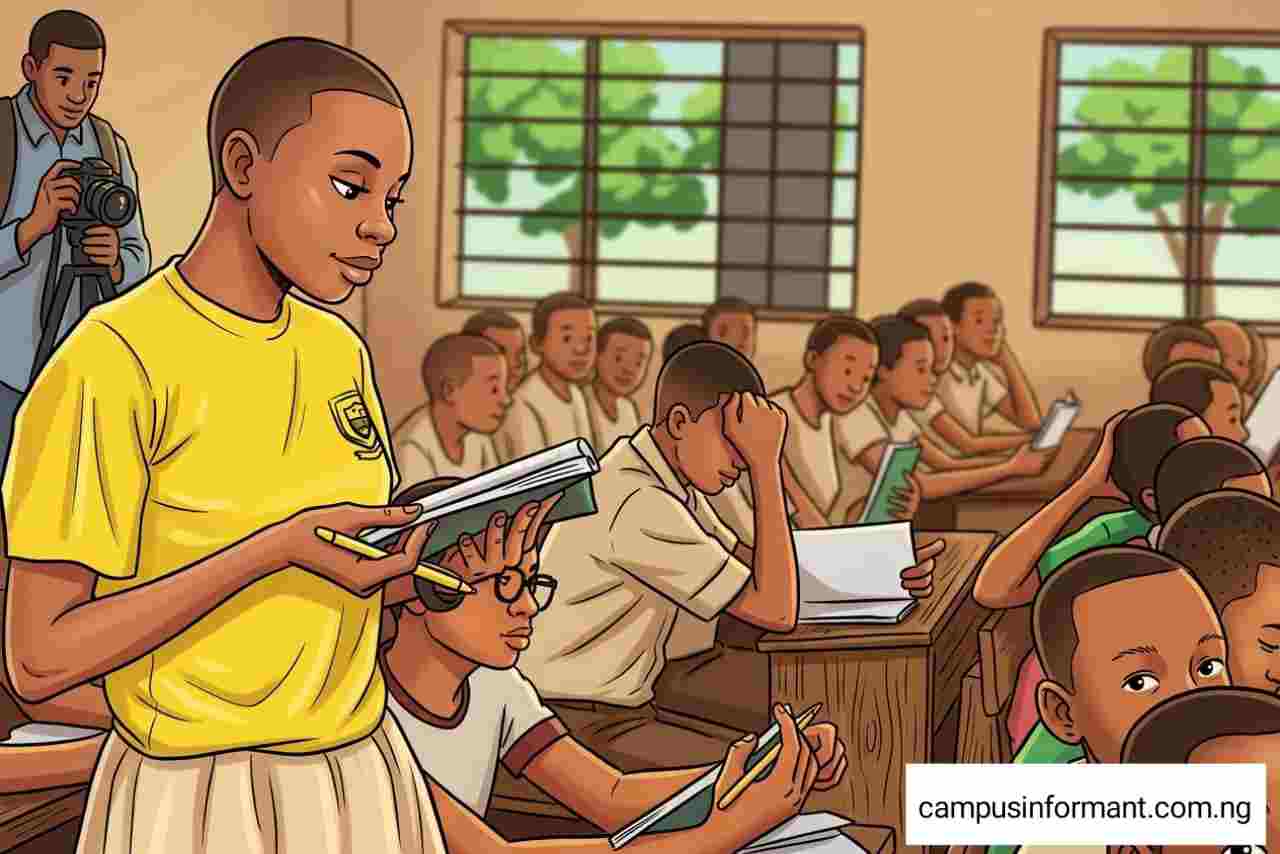
Why Smart Secondary School Students Sometimes Struggle in University: Many students leave secondary school with excellent results and high expectations for university life. If you graduated as one of the best students in your class, people naturally assume you will continue dominating academically at the university. Strong grades in WAEC, NECO, and other examinations often create the belief that success in higher education will come easily.
However, reality turns out differently for many students. A surprising number of former top-performing secondary school students begin to struggle academically after entering university. This situation is more common than people admit, and it is not a sign of laziness or reduced intelligence. Instead, it reveals a major difference between how secondary schools teach and how universities expect students to learn.
This article explains, in simple and honest terms, why brilliant students sometimes face difficulties in university and what can be done to overcome these challenges.

The Difference Between Secondary School Learning and University Education
Structured Learning vs Independent Learning
Secondary school education in Nigeria is highly structured. Teachers guide students closely, lessons follow clear syllabi, and examinations often repeat familiar patterns. Students know what to expect, and success usually depends on consistent revision, memorisation, and practicing past questions.
In this system, teachers act almost like daily supervisors. They remind students about assignments, monitor attendance, and ensure learning stays on track. As a result, students develop strong exam-taking skills but may not fully develop independent learning abilities.
University education operates very differently. Lecturers provide direction, but students are largely responsible for their own academic progress. Nobody reminds you to study. Nobody checks whether you revised your notes. You are expected to understand concepts deeply, ask questions independently, and connect ideas across multiple topics.
For students who thrived under structured guidance, this sudden shift can feel overwhelming.
Memorisation No Longer Guarantees Success
Many secondary school examinations reward recall. If you can remember definitions, formulas, and past question patterns, you are likely to score high marks.
University assessments, however, focus more on application and analysis. Questions may look unfamiliar even when they come from topics you have studied. Lecturers expect students to explain ideas, evaluate arguments, and solve new problems using learned concepts.
This change explains why some students who were once academically outstanding begin to struggle. The learning strategy that worked before may no longer be enough.
Academic Expectations Change Faster Than Students Expect
Critical Thinking Becomes Essential
At the university level, learning moves beyond “what is the answer?” to “why is this the answer?” Students must analyse information, compare theories, and sometimes defend their opinions academically.
This requires critical thinking skills that are not always emphasised in secondary schools. Without prior exposure to analytical learning, even brilliant students may initially feel lost during lectures or examinations.
Heavy Academic Workload
Another shock many students face is the volume of academic work. University courses often require extensive reading, research assignments, presentations, and group projects.
Unlike secondary school, understanding lecture notes alone may not be enough. Students must consult textbooks, journals, and online academic resources regularly. Those who underestimate this workload often fall behind quickly.
Freedom and Independence: A Hidden Academic Challenge
Too Much Freedom, Too Soon
University life introduces a level of freedom many students have never experienced before. Lectures may not be compulsory, schedules are flexible, and supervision is minimal.
While this independence is exciting, it can also become a major challenge. Time management suddenly becomes a personal responsibility rather than a school rule.
Students who were previously described as “naturally brilliant” sometimes rely on last-minute studying habits that no longer work in university settings. Without discipline and planning, academic performance can decline.
Poor Study Habits Become Visible
Secondary school structure sometimes hides weak study habits. Daily classes and frequent tests force students to read consistently.
In university, gaps in study discipline become obvious. Students must create their own reading schedules, manage multiple courses at once, and balance academics with social life.
Psychological and Social Adjustments
From “Best Student” to “One Among Many”
In secondary school, a brilliant student may stand out easily. University brings together top students from different schools and regions. Suddenly, everyone around you was also a high achiever.
This shift can affect confidence. Some students begin to doubt themselves when they are no longer the highest scorer in class. Others experience pressure to maintain their former identity as “the smartest.”
Learning to redefine success becomes an important psychological adjustment.
Fear of Failure and Fixed Mindset
Students who strongly associate intelligence with effortless success may struggle emotionally when academics become difficult. Instead of adapting their study methods, they may interpret challenges as proof that they are no longer capable.
Educational psychology shows that students who develop a growth mindset — believing skills improve through effort — adjust better to university demands.
Mental Health and New Responsibilities
University life also introduces financial concerns, relationship changes, and uncertainty about future careers. These pressures can affect concentration and motivation.
Academic struggles are sometimes connected not to intelligence but to stress, anxiety, or poor emotional adjustment during this transition period.
Structural Gaps in the Education System
Limited Focus on Transferable Skills
One major issue is that secondary education often prioritises examination performance over skill development. Skills such as research writing, independent study, problem-solving, and academic discussion are essential in university but may receive little attention earlier.
As a result, students enter university academically qualified but skillfully unprepared.
Course Misalignment and Career Confusion
Some students gain admission into courses they did not originally plan to study due to admission limitations. When interest and academic strengths do not align with a chosen programme, motivation decreases, regardless of previous academic excellence.
Career guidance at earlier stages could help students make better-informed decisions.
Digital and Research Skills Gap
Modern university education relies heavily on technology — online submissions, digital libraries, research databases, and collaborative tools. Students unfamiliar with these systems may struggle initially, even when they understand course content.
How Students Can Overcome These Challenges
Develop Independent Learning Skills
Students must transition from being teacher-dependent to self-directed learners. Creating personal study schedules, setting goals, and reviewing lecture materials early can make a significant difference.
Focus on Understanding, Not Memorising
Instead of cramming information, aim to understand concepts deeply. Ask questions during lectures, discuss topics with classmates, and practice applying knowledge to real-life scenarios.
Build Time Management and Discipline
Consistency matters more than intelligence at the university level. Small daily study habits often produce better results than last-minute reading.
Seek Support Early
Universities provide academic advisers, study groups, and mentorship opportunities. Seeking help is not a weakness; it is a strategy successful students use.
The Real Truth About Academic Success
The struggles of brilliant secondary school students in university do not mean they were overrated or unprepared intellectually. Rather, they highlight an important truth: academic success depends on environment, learning methods, and adaptability.
Excelling in one educational system does not automatically guarantee success in another. University rewards curiosity, resilience, discipline, and continuous learning just as much as raw intelligence.
When students understand this early and adjust their approach, many rediscover their academic strength and even perform better than before.
Preparing students for university should therefore go beyond helping them pass exams. It should equip them with lifelong learning skills — the ability to think independently, adapt to new challenges, and grow through experience.
Follow us on our WhatsApp channel by CLICKING HERE and you can comment through the comments section if you have any questions or contributions.
